General Assembly tasked my team with designing a solution to help increase new and repeat visits to this Sydney mainstay.
Significance: This project focused on creative problem solving, teamwork and service design.
My role:
Tools: Sketch 3.0, InVision, iPad, pens, paper, and a bucket of creativity
Team: Toby Minton, Katie Chen, Sujanya Rajan
Timeframe: 2 weeks
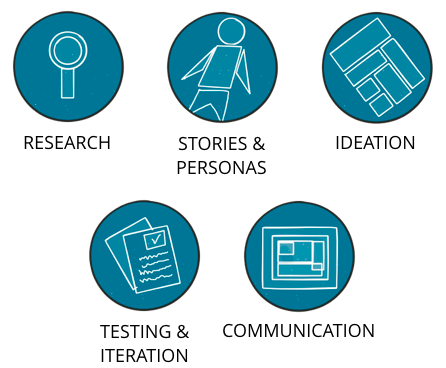
 RESEARCH
 To ensure we built a clear picture of the business and its customers, I worked with my
team to develop a comprehensive research strategy including:
-Interviews
-Contextual inquiries
-Surveys
-Social media study
-Review and feedback analysis
FINDINGS:
During our first site visit, we noticed a common pattern. Before parents could read and explain most exhibits, their kids lost interest and wandered away. This resulted in a natural clustering around the more kid-friendly exhibits.
Further research backed our initial findings: Kids love the museum’s education excursions, but unguided family visits are often disappointing.
The story our research wanted to tell was clear…
PROBLEM
Kids who visit the Powerhouse Museum want to learn on their own, but many exhibits are unable to simultaneously entertain and educate.
 STORIES & PERSONAS
Developing good personas was a must for this project. To design the right solution we needed to have firm grasp on what the different types of visitors wanted from their experience.
I dove into persona creation with a passion, using skills I’ve been practicing since childhood. Just like my fiction characters embody traits of different people I’ve met, great personas possess traits from the many users we observed, studied and interviewed.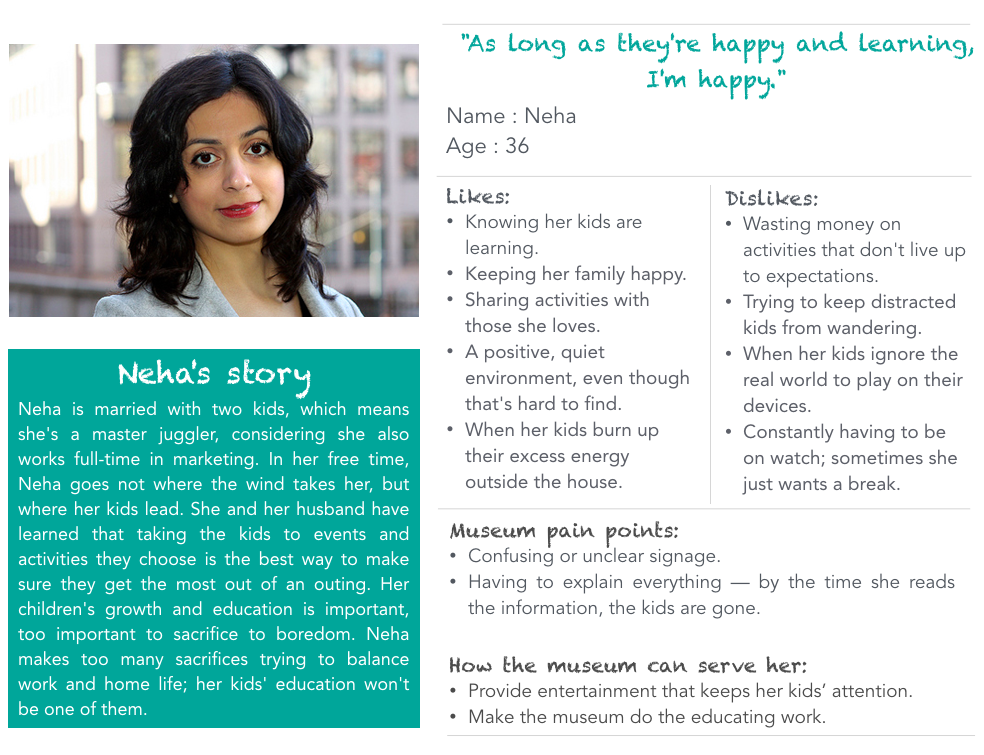

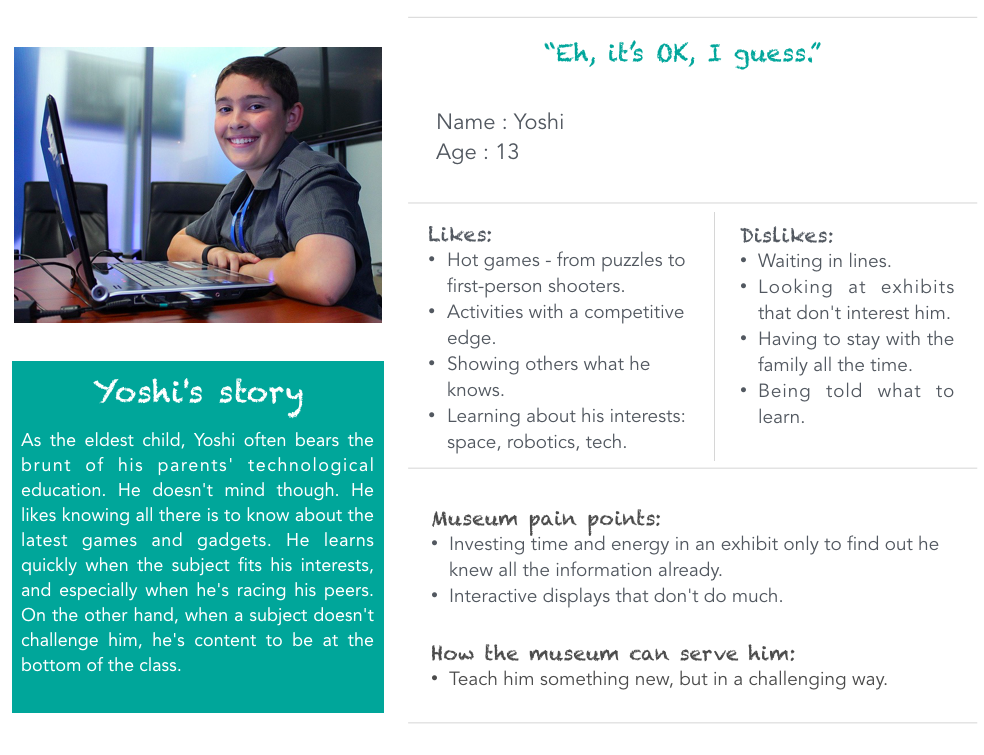
Based on our observations and data, we realized our story had a single protagonist. We needed to focus our efforts on our youngest persona, Grace. If we made her happy, the rest would follow.
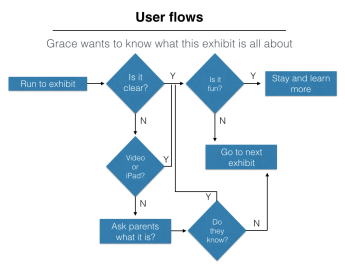 Getting the most out of our personas meant putting them to work. To give them life I mapped out stories and flows to capture how each persona would behave in the museum and what they expected from an exhibit. This helped us highlight the key pain points we had to target.
“As an explorer, when I find something new in the museum, I want to learn what it is on my own so I can feel smart.”
– Grace
 IDEATION
Now that we knew who we were helping, we needed to know the how. Keeping our protagonist Grace foremost in our thoughts, we ran through rapid ideation activities to discover our solution.

Through intense brainstorming sessions (with equally intense debates) we threw every concept we could imagine at the problem. We weighed and analyzed every idea, but only one fit Grace’s story—an interactive game.
SOLUTION
Design an interactive app that balances fun and learning, keeping kids engaged, parents and teachers happy, and MAAS thriving.
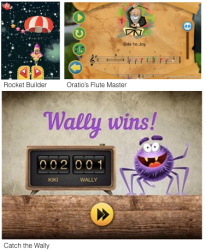 Designing for kids is a discipline all its own. To learn how to reach our audience, we studied early childhood education through essays, websites, games and popular apps.
FINDINGS:
Use bold colours, engaging characters, and reward every success.
We grouped our requirements into a priority matrix and narrowed our must-haves into a short list of core requirements.
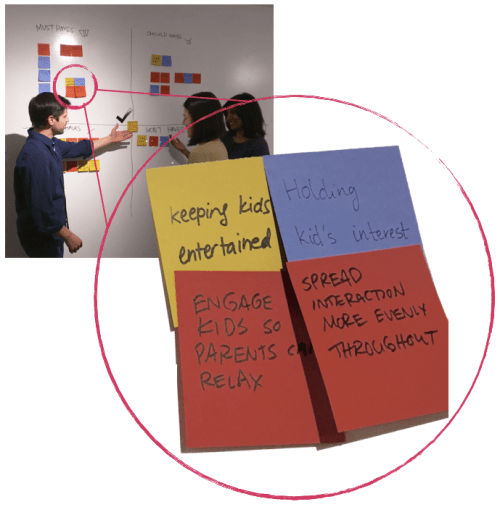 Then we sketched wireframes of our solution — a game where Grace had to find parts of each exhibit and learn more about them in the process.
 TESTING & ITERATION
Testing was particularly challenging for this project. Due to tight schedules and limited access to the museum, we couldn’t test with our target users on site. So we did the next best thing — we developed a detailed walkthrough script and tested with kids wherever we could find them.
 I implemented a number of refinements to our app after we analysed our test data, including enhancing our in-game instructions and devising a system for redeeming in-game points for tangible gifts in the museum store, giving Grace a more exciting goal.
I don’t want to say I have a gift for rapid data synthesis, but… Actually, I don’t want say “rapid data synthesis” ever again. Sounds like something you’d catch at math camp.
 COMMUNICATION
With several rounds of testing behind us, we added sharper images and mock-up videos to give a clearer picture of what the final product would look like on a tablet in the museum.
Learning from our testing challenges, we then put images from our clickable prototype over backdrop images from the museum to present to the client and team, creating an immersive walkthrough of the app.
GAME AT A GLANCE
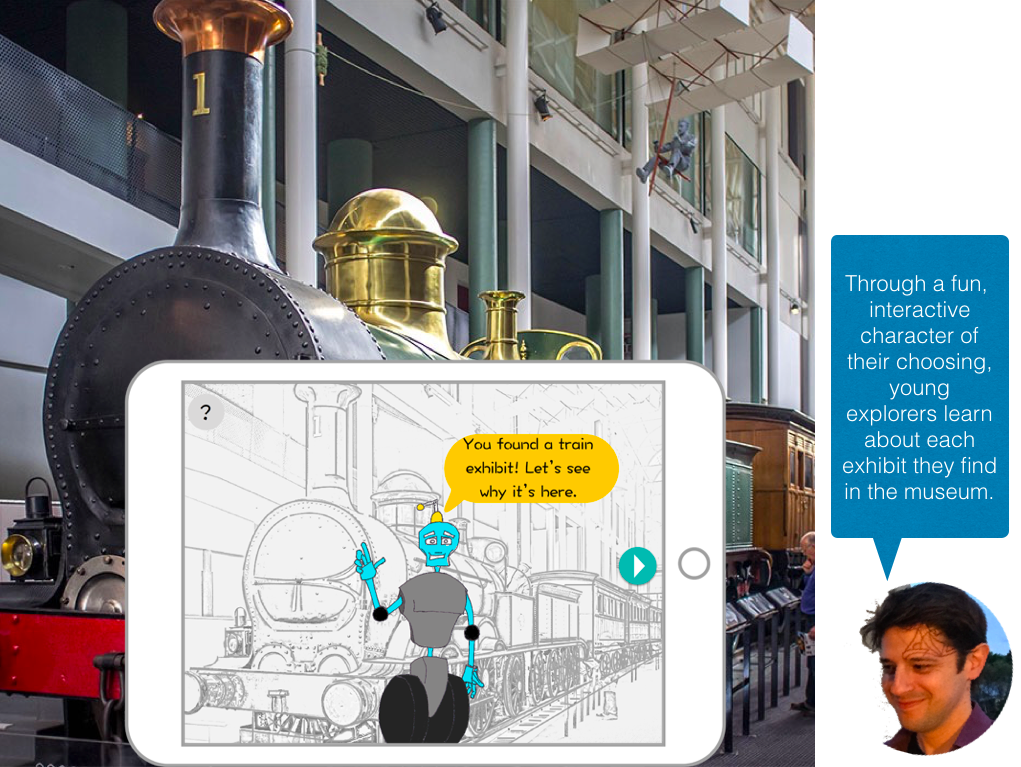


Click to view the interactive prototype in a separate tab.
NEXT CHAPTER
If MAAS were to proceed with this app, we would need to tackle several additional challenges:
- Extensive on-site testing with kids aged 6-9. I can’t stress enough the importance of this step
- Augmented reality content for each exhibit
- Monetary value of points for use in the museum store
- Help menu with contextual help for each screen in the app.
Once these steps are complete and the app fully tested, we could then expand it to appeal to older kids, like our persona Yoshi, who crave more competition and need a more challenging experience. We sketched and scripted a quiz version of the game that allows Yoshi to challenge other nearby players at each exhibit to compete for their spot on the museum leaderboards, possibly shared on the MAAS social media channels.
WHAT THIS PROJECT TAUGHT ME
While this project reinforced many of the tenets of UX design for me, it also illustrated the power of a small but diverse team.
The mix of personality types and work styles on our team couldn’t have been more varied. Each of us approached problems and solutions from a different angle and had strong opinions about the best way to proceed. This creative tension ensured that every feature of our design was weighed, judged and forged in the fire of perfection.
Equally important for my own development was the realisation that my ability to rapidly blend opposing ideas into a single solution is more than just a minor asset—it’s a powerful strength.
 Toby Minton