
A Sydney startup brought me onboard to drive UX design and develop documentation for a developing fintech service.
Significance: This project focused on expert analysis, rapid prototyping, and wearing as many hats as possible.
My role:

Tools: Sketch 3.0, Keynote, JIRA, and a bigger hat rack
Timeframe: 3 months
 RESEARCH
When I joined the team, they already had a website and app in beta, but the development team was bogged down by conflicting direction from stakeholders spread across the country.
My first task was clear: discover exactly how each stakeholder viewed the product and its future so we could align on a common vision.
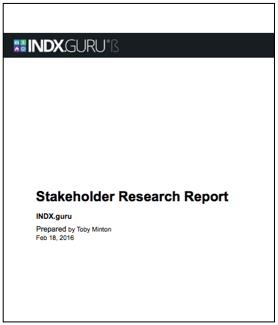
Findings:
The research confirmed that the stakeholders were not on the same page. They disagreed about who their target users were and how best to cater to their needs.
The report helped them see where their visions differed, and it helped us form a plan to ensure alignment going forward.
Solution
Regular team meetings to agree on the product’s direction and ensure all changes were visible and endorsed by all stakeholders.

FACILITATION
Getting on the same page wasn’t just going to happen naturally, however, or it would have happened already. We needed a little facilitation to get everyone talking, and more importantly, agreeing on a direction.
To make this happen, I set up two important weekly sessions:
- All-hands strategy meetings
- Sprint planning/showcase
Strategy meetings got the stakeholders talking each other, and with the development team to help there to provide input, they could better shape their vision.
The combo sprint planning and showcase let the dev team show their progress and get feedback from the stakeholders on what tasks they tackled next. It also gave the stakeholders a realistic view of the amount of effort required to make their vision a reality.
 BOARDS & FLOWS
Once we started meeting regularly, we quickly mapped out a strategy for how we wanted to reach users, which I captured in simple storyboards.
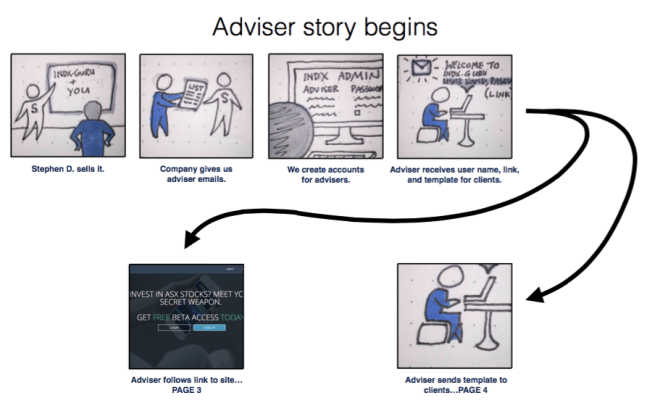
With plans and boards in hand, I could then dig into the interface and map flows for our targeted users.

WIREFRAMES
Once we had a vision and a plan, I got to work on the wireframes for features already on the team’s backlog.
For each story, I gathered requirements from the business, mocked solutions, tested those solutions on representatives from the main user group, and iterated as needed.
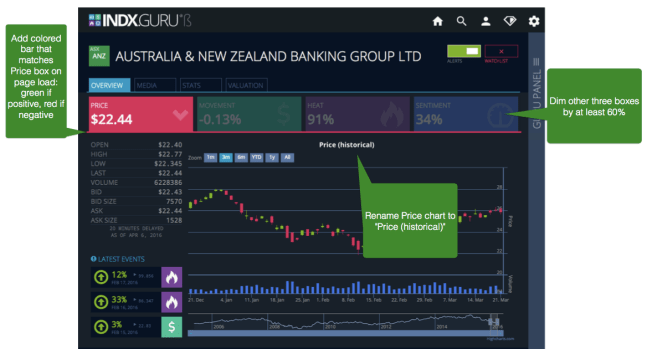
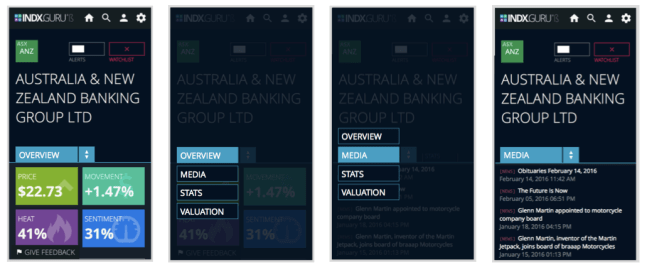
I then annotated the Sketch wireframes and added them to the JIRA stories for the dev team to action.
WHAT THIS PROJECT TAUGHT ME
My time with INDX GURU showed me how broad the field of UX can be. Sure, UX in a small startup is still, at its core, about getting users’ voices into the process from start to finish. But the journey to get there can require much more than the more obvious UX skills.
Understanding people’s needs, goals and pains is the name of the game, but that game shouldn’t be limited to end users only. The needs, goals and pains of the business are just as important to making a successful product.
My biggest takeaway was the realisation that UX is as much about helping people work together as it about designing solutions, sometimes more so.
 Toby Minton